
Discovery - How to Set Your Product Development Up for Success
How to run a discovery phase for a hardware product: gather what exists, define functional requirements, map constraints and plan before you design.
By Nathan Ruttley, CEO and Co-Founder··4 min read
Every successful product begins long before sketches turn into prototypes.
We make early design decisions based on the information we have at the start of a project. These design decisions often set the trajectory for the entire project, so it's best to base those decisions on good information. This is why we ask questions and challenge assumptions to gain clarity before pen hits paper (or the mouse hits the CAD?).
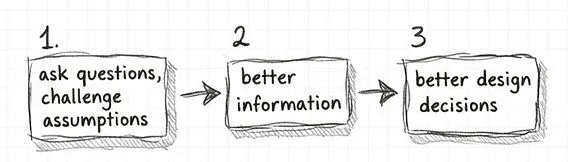
Discovery is the name of this early exploration stage. If you like TRLs, discovery covers TRL 0-2.
Why the discovery phase matters
What is the product? Why does it exist? What constraints shape it? What does it do?
Answering these questions ensures that there is a shared understanding across the team. Only once there is an agreed, and shared, understanding of what is being built does it make sense to build it.
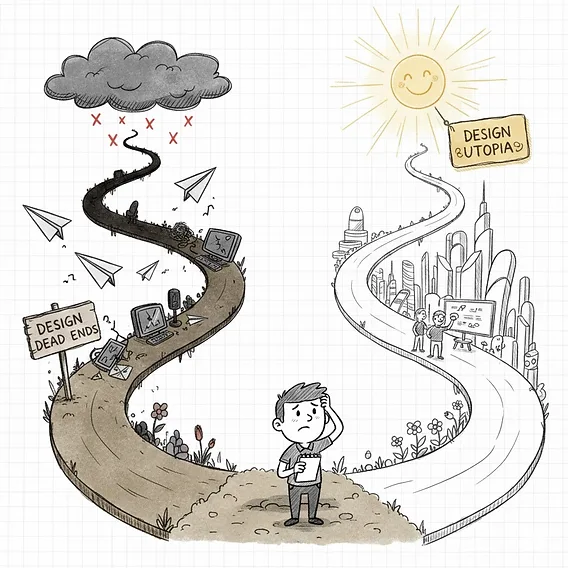
Neglecting this step often leads to:
Discovery doesn't eliminate risk, it reduces the number of "unknown unknowns". These are often what derail a project.
The core goal of discovery: clarity
At its heart, Discovery is about answering three essential questions:
Answering these questions doesn't make development and engineering easy, but it will allow you to chart a focused and efficient path to success.
How to run an effective discovery phase
Here come the lists and thought prompts! Most teams will benefit from the following activities.
1. Gather and review existing material
Before creating anything new, collect and assess what already exists. This might include:
What you're looking for: emerging themes, red flags, bias.
2. Speak with key stakeholders early
Stakeholders have retained knowledge across a broad spectrum of areas. Take time to talk with:
One or more of these people might be you, so dig deep!
3. Define the product's functional requirements
Functional requirements describe exactly what the product must do. They should be written in plain language and agreed upon early.
Think:
Clear functional requirements prevent scope creep and guide engineering choices.
4. Map out constraints and risks
Consider anything that could impact how the product is designed or built:
Listing these early reduces surprises later.
5. Outline a development plan
Plans can change, but it's best to start with something rather than winging it. This usually includes:
A plan brings structure, and structure creates momentum.
What good discovery produces
At the end of this phase, you should be able to produce a short collection of documents or notes that capture your team's shared understanding. These often include:
These don't need to be perfect, some of these might be "working documents". So long as they are clear, helpful, and agreed upon you're good to go.
When discovery is "done enough"
Discovery doesn't have to be exhaustive. The right stopping point is when:

<insert cheesy image of engineers who are happy they have design clarity>
What comes next: feasibility
Once you know what you're building and why, the next challenge is ensuring that your product is actually viable. That's where the Feasibility phase comes in. Feasibility focuses on validating assumptions, testing critical unknowns, and reducing risk.
Part 2 of this series covers how to approach feasibility work, what kinds of experiments matter most early on, and how to avoid wasting time on the wrong technical pathways.
Related services
Prototyping Services →
Functional prototypes built by the team that will take the product to production, so what you learn on the bench still applies at volume.
PCB Design Services →
Schematic capture, multi-layer PCB layout and design for manufacture, delivered by engineers who also build and test the boards they draw.
Mechanical Design Engineering →
Enclosure and mechanical design that is manufacturable, integrates with the electronics inside it, and still feels good in the hand.
Working through this on your own product?
Tell us what you are building and what you need to find out next.